The Resale Certificate Is Doing More Work Than the Median Price on Capitol Hill
August 27, 2026
August 27, 2026
What if the number everyone quotes about Capitol Hill's housing market is the least useful one for a condo buyer to know?
As of mid-2026, Capitol Hill's median sale price sits around $792,000. That figure gets repeated in market updates and dinner-party conversations alike, and it tells you almost nothing about what you'll actually pay or what leverage you'll have. Standalone houses on the Hill trade between $1.1 million and $1.5 million. Condos, which make up the bulk of the neighborhood's sales volume, anchor the market closer to $500,000 to $700,000. The median is an average of two markets moving in opposite directions, and the gap between them is exactly why a document most buyers skim in five minutes deserves a much closer read this year: the resale certificate.
Capitol Hill's single-family segment is still tight. Recent citywide inventory reads put detached houses near 2.1 months of supply, the kind of number that keeps multiple-offer situations alive on a well-priced Craftsman near North Capitol Hill. Condos are a different story. The same data shows the condo segment loosening to roughly 4.4 months of supply, and Capitol Hill carries about 110 active listings against 3.5 months of overall supply, a mix that tips only slightly toward sellers once you separate out the detached homes pulling the average up.
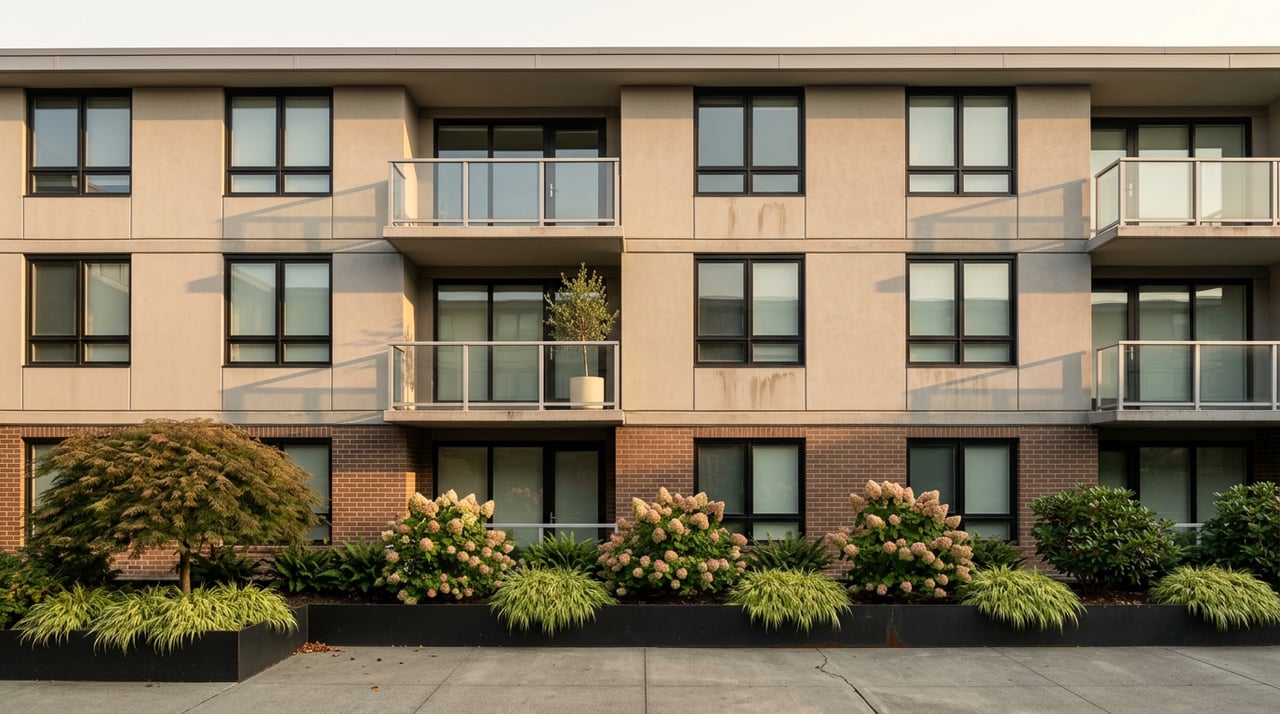
Part of that condo supply is new. A project near Broadway and Pine called the Constellation Center added roughly 84 units to the corridor, with a design brief aimed at reinforcing density near the light rail station. Another project closer to the Central District, built with a jigsaw layout meant to blend into the existing streetscape, brought around 138 more units online. Both were targeted for completion around mid-2026. New supply plus a wave of apartment deliveries over the past two years has done what supply does: it gave condo buyers room to negotiate that didn't exist when Capitol Hill listings drew bidding wars as a matter of course.
That room to negotiate matters because of what happens next in a typical transaction. Homes across Capitol Hill are still going under contract quickly, with a median time to contract of about 21 days and sellers closing near 99% of list price. That pace can make a buyer feel like there's no time to slow down and read paperwork. But a soft condo segment changes what a red flag in that paperwork is worth to you.
Washington law requires a condominium owner to furnish a resale certificate to a buyer before the sale closes, under RCW 64.34.425 for older associations or RCW 64.90.640 for associations under the newer unified code. The certificate is not a marketing document. It is a financial and legal snapshot of the building itself, covering unpaid assessments against the specific unit, any pending special assessments, the association's current reserve study, a balance sheet current within 120 days, and disclosure of any lawsuits involving the association.
The association has 10 days after a written request to produce it, and the fee for preparing it is capped by statute at $275 for the initial certificate. Once delivered, the buyer typically gets a five-day window to review it and cancel the contract outright if something in the document is disqualifying. That five-day clock cannot be shortened or waived by the purchase contract. It functions less like fine print and more like an inspection contingency for the building's finances rather than its foundation.
Reserve funding is the line worth reading twice. A reserve study that shows the association funded well above two-thirds of its projected future repair costs is generally a sign of a well-run building. One funded below roughly a third is a signal to slow down, because that gap usually gets closed one of two ways: a special assessment that lands on your desk shortly after closing, or years of underinvestment in the roof, siding, or plumbing that eventually shows up as a bigger bill. On Capitol Hill specifically, where building stock ranges from 1920s brick walk-ups to new glass-and-steel infill, that funding gap tracks closely with age. Older buildings often carry higher dues simply to catch up on masonry and plumbing maintenance that newer construction hasn't needed yet.
Here is the detail that catches buyers, and sometimes their agents, off guard. Washington currently has two different resale certificate forms in circulation, because the state is mid-transition between its older condominium statute and the newer Washington Uniform Common Interest Ownership Act, or WUCIOA, which becomes the sole governing law for all common interest communities in 2028. Associations formed under the older statute use Form 27. Associations that have opted into or fall under the newer code use Form 27CIC. The two forms are not interchangeable, and delivering the wrong one means the buyer's five-day rescission clock never actually starts running, according to guidance from the Washington Realtors legal hotline. If a board or property manager hands over the wrong version, a buyer who thinks their review window closed on day five may still have live rescission rights they don't know about, and a seller who thinks the sale is final may be more exposed than they realize.
This is precisely the kind of detail that separates a rushed condo closing from a clean one. It costs nothing to confirm which form an association is using before assuming a deadline has passed.
Here's the mechanism worth sitting with. In a tight condo market, finding a red flag in a resale certificate, an underfunded reserve, an unresolved dispute, a pending assessment, puts a buyer in an uncomfortable spot. Walking away means losing the unit to the next offer in line, so plenty of buyers talk themselves into accepting the risk. In a condo segment sitting at 4.4 months of supply, that same red flag stops being a reason to walk and starts being a reason to renegotiate. A listing that's been sitting for a month has a seller who is far more likely to entertain a price adjustment, a credit toward a coming assessment, or an extended closing timeline to let the HOA sort out a documentation gap, because the alternative is relisting into a market where buyers have other options.
That shift only works if you actually read the certificate closely enough to know what you found. A buyer who treats the five-day window as a formality to sign off on has no leverage to use. A buyer who reads the reserve study, checks the percent funded, and confirms the balance sheet is current has a specific, documented reason to ask for something back at the table.
A few habits make the difference between using this document and rubber-stamping it. Confirm early which resale certificate form the association is required to use, since that determines whether your rescission clock is running at all. Ask when the reserve study was last updated, since a study more than a few years old tells you less than the association thinks it does. Read the balance sheet date against the 120-day requirement rather than assuming it's current. And if you're a seller, consider requesting the resale certificate before you list rather than after you go under contract, since ordering it after mutual acceptance can add two weeks to closing once the 10-day production window and 5-day review period stack on top of each other.
Does the five-day resale certificate review run at the same time as my home inspection? No. They are separate contingencies with separate clocks, and both need to be tracked independently in the purchase timeline.
Can a buyer waive the resale certificate entirely? Under limited circumstances outlined in state law, yes, but doing so gives up one of the strongest financial protections available in a condo purchase and is worth a direct conversation with your agent before signing anything.
What happens if the reserve study doesn't exist at all? State law requires the certificate to say so explicitly, using specific disclosure language warning the buyer that the lack of a current reserve study carries real financial risk. Treat that disclosure as a serious flag rather than an oversight.
If you're comparing a Capitol Hill condo against other options on the Hill or elsewhere in Seattle, the paperwork is where the real picture of a building's health shows up, long before a problem shows up in your mailbox as a special assessment. Lizanne Wicklund works through resale certificates and building financials with buyers and sellers across Capitol Hill every week. If you want a second set of eyes on a building before you waive a contingency, reach out and work with Lizanne.
Stay up to date on the latest real estate trends.





With an early career in design, marketing, and corporate partnerships at Seattle’s top firms, Lizanne brings a sharp, creative edge to residential real estate. She combines expert negotiation with data-driven marketing to deliver seamless results. Whether finding your dream home in Seattle or the Eastside's most coveted neighborhoods—or maximizing value for your property—Lizanne provides unparalleled service backed by Windermere, the region’s most trusted brokerage.
Let me know how I can assist you.