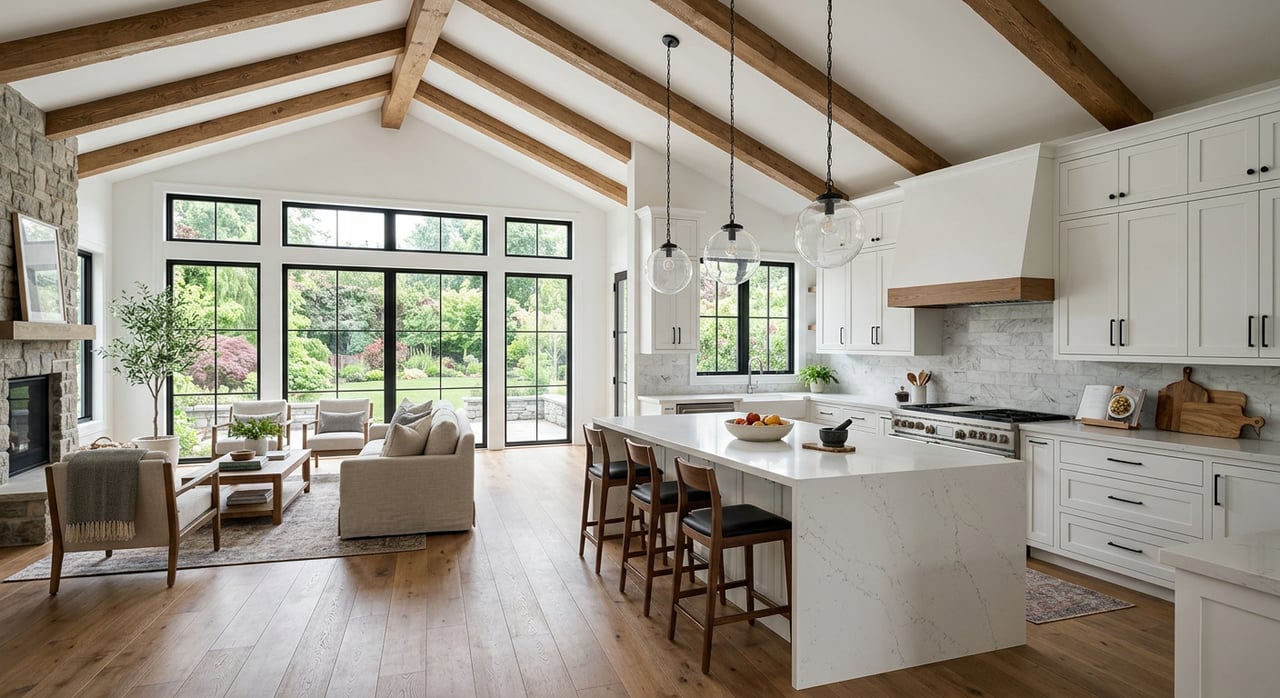
Remodel Or Move On In Wallingford
March 12, 2026
March 12, 2026
Is your Wallingford home starting to feel too tight or a little out of step with how you live today? You are not alone. Many homeowners wrestle with whether to open walls and rework what they have or open the door to a new address. In this guide, you will get a clear, local playbook to compare remodeling versus moving, including market signals, what your lot allows, permits and timelines, realistic costs and ROI, ADU options, and a simple decision framework. Let’s dive in.
Wallingford remains one of central Seattle’s most sought-after neighborhoods, but the tempo has shifted since the white-hot years. Regionally, inventory rose through 2025 and into early 2026 while median prices held roughly steady in county-level snapshots, a sign that buyers have more choices than they did a few years ago. When buyers have options, light cosmetic updates often deliver smaller price lifts than in a tight seller’s market.
What does that mean for you? Projects that fix functional gaps tend to matter most. If you can solve for an extra bedroom, a second bath, or a better flow to the kitchen and great room, you often see clearer value. If your needs outpace what your house or lot can reasonably handle, moving may be the more efficient path.
Before you price a remodel, confirm what your parcel can support. The King County Assessor’s Green Lake and Wallingford area report shows a typical lot size around 4,100 square feet, with many homes built before 1940. Smaller lots and older structures can limit large additions or multi-unit redevelopment unless you leverage updated rules. Review your setbacks, lot coverage, and any floor area limits early in planning. Refer to the county’s profile for context on prevailing parcel sizes and building patterns in the area using the Green Lake/Wallingford assessor report.
Seattle also updated zoning to comply with Washington’s middle-housing law. The city adopted interim Neighborhood Residential rules in 2025 that expand the potential for more units on many lots, with specifics tied to site and location. This improves long-term redevelopment math in some cases, but it does not make every parcel a simple teardown-to-multiplex candidate. Site constraints, tree protection, and design standards still apply. For background on the rule change, see coverage of Seattle’s interim adoption of middle housing on The Urbanist.
Practical takeaway: on a typical Wallingford lot, your near-term options usually include interior reconfiguration, a main-floor or second-story addition within limits, an attached or detached ADU, or in fewer cases, full redevelopment when economics, financing, and approvals align.
Accessory dwelling units continue to be a popular way to add livable space and optional income without a teardown. Seattle’s SDCI provides clear ADU guidance along with pre-approved backyard cottage designs that can speed review. Explore the city’s ADU overview and pre-approved resources on the SDCI ADU page.
What do ADUs cost and rent for in practice? The City’s ADU Annual Report, based on owner surveys, shows median reported construction costs of about $100,000 for internal ADUs and about $230,000 for detached ADUs. Reported median ADU rents clocked in around $1,650 per month. You can review the details in the city’s ADU Annual Report. Treat an ADU as a long-term lifestyle and cash-flow play rather than a quick flip to fully recoup costs at resale.
Permitting time is part of the real timeline. Seattle’s permit performance dashboard reports that for 75 percent of projects, city-control review times are typically several weeks to a few months, depending on complexity. Recent reporting shows pre-approved DADU plans and single-family additions often see around two months of city-control days, with total calendar time commonly longer when you include applicant response cycles. Expect several months of permitting for anything beyond small repairs. For current benchmarks, check the city’s permit performance dashboard.
Build time depends on scope. Even a targeted kitchen or bath refresh can disrupt daily life for weeks. A full addition or ADU will commonly span multiple months. If you need to live on site during work, factor in noise, dust, parking, and temporary kitchen or bath setups.
Local contractors report midrange kitchen remodels in Seattle commonly range from about $30,000 to $75,000, with luxury or structural changes running higher. Bathroom updates and secondary-bath additions vary widely based on scope. Seattle’s labor, permit, and material costs often run above national averages, so use local bids for planning. For a helpful local breakdown, see this Seattle kitchen remodel cost guide.
To set expectations around payback, the industry’s Cost vs Value study for the Pacific region shows that targeted exterior replacements and selective interior work often recoup a high share of cost, while big custom projects have more variable returns. Review the latest Pacific region ROI tables in the Cost vs Value report.
High-impact projects in Wallingford typically include:
When you consider moving, include all line items, not just the next home’s price.
When you tally these costs, compare them to your remodel plan. A large remodel that does not change bedroom or bathroom counts meaningfully may be harder to justify than buying a home that already fits your needs.
There are several ways to fund a remodel or ADU.
Ask a lender to outline payment, equity, and appraisal impacts for your scope and time horizon. If you expect to sell soon after completion, confirm how an as-completed appraisal would view the improvements.
Use this simple sequence to compare outcomes with clarity.
If you are torn between opening your floor plan and opening a new door, start with a grounded comparison. A local CMA, two or three bids, and a quick review of ADU feasibility will clarify your best return and your best lifestyle fit. If you decide to sell, polished presentation and the right buyer narrative can make a material difference in outcome. If you decide to remodel first, financing and timing tools can remove stress.
You do not have to navigate this alone. As a design-minded Windermere broker, Lizanne pairs elevated marketing with practical programs like Windermere READY and Bridge Loan to smooth timing and maximize results. If you want a clear, Wallingford-specific plan that respects both aesthetics and numbers, let’s talk.
Stay up to date on the latest real estate trends.
With an early career in design, marketing, and corporate partnerships at Seattle’s top firms, Lizanne brings a sharp, creative edge to residential real estate. She combines expert negotiation with data-driven marketing to deliver seamless results. Whether finding your dream home in Seattle or the Eastside's most coveted neighborhoods—or maximizing value for your property—Lizanne provides unparalleled service backed by Windermere, the region’s most trusted brokerage.
Let me know how I can assist you.